Venue Adaptations Reshaping Probability Models in Team Sports and Thoroughbred Racing
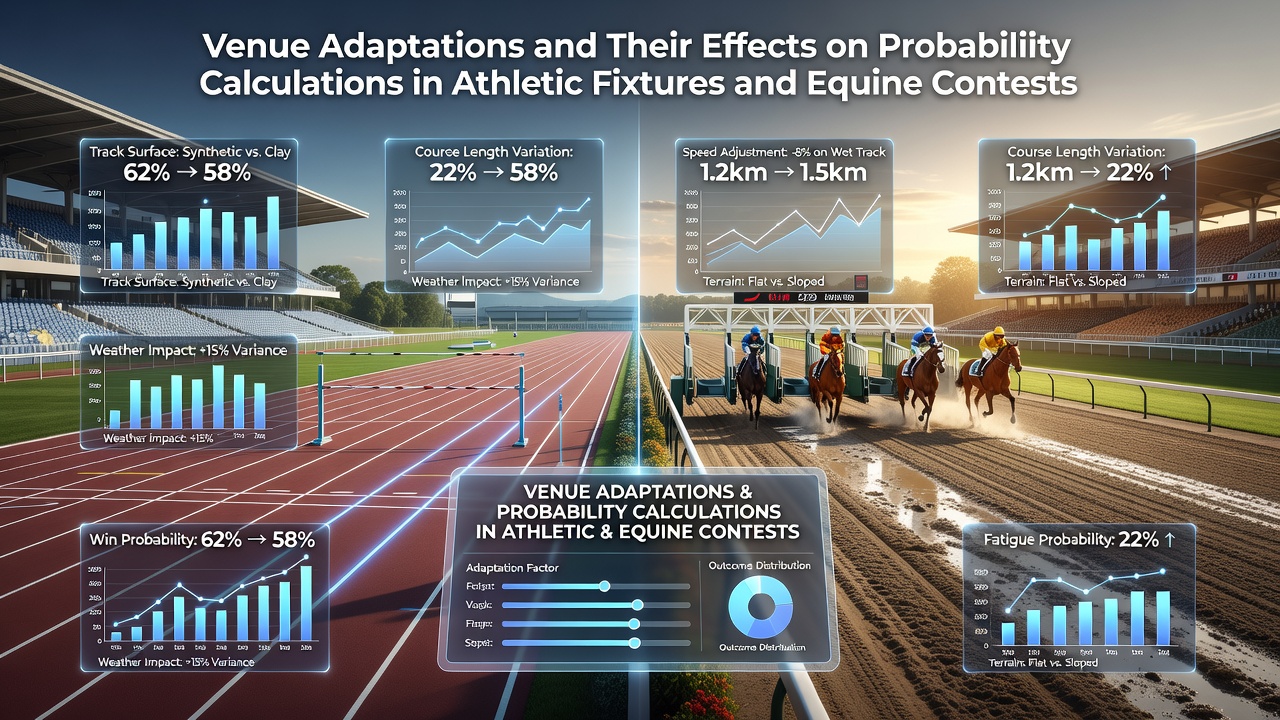
Venue adaptations alter how analysts calculate probabilities in football matches and horse races because surfaces, dimensions, and environmental controls shift expected outcomes in measurable ways. Observers note that stadium renovations often include hybrid pitches or retractable roofs while racetracks introduce new rail positions or drainage systems, and these physical changes feed directly into statistical models used by researchers and betting operators alike.
Physical Changes at Football Grounds
Modern football stadiums frequently adopt variable pitch lengths and widths within permitted ranges, and such adjustments affect passing angles plus crossing success rates that underpin expected goal calculations. Data from league-wide tracking systems show that teams playing on narrower pitches record fewer through-ball attempts yet generate higher percentages of shots from central zones, which in turn revises pre-match probability estimates for both sides. Altitude also plays a role at certain venues where reduced oxygen levels accelerate fatigue, and studies compiled by European sports science institutes demonstrate measurable drops in high-intensity running after the seventy-minute mark at those locations.
Track Configurations in Horse Racing
Racetrack operators modify bend radii, starting gate placements, and turf versus dirt compositions to suit local climates or safety requirements, and each modification influences speed figures and sectional timing data that feed into win probability algorithms. A switch from turf to synthetic surfaces, for instance, compresses the spread of finishing times because horses encounter more consistent footing, and analysts adjust their models accordingly by lowering the variance parameter in multivariate regressions. Rail movements that bring the running line closer to the inside fence reduce the distance horses must travel on turns, which elevates the calculated chances for front-running types while diminishing those for deep closers.
Data Integration and Model Updates
Researchers incorporate venue-specific coefficients into logistic regression frameworks and Poisson distributions that forecast match or race results, and these coefficients derive from historical performance records segmented by location. When a venue undergoes adaptation, such as the addition of a new drainage layer or the shortening of a home straight, the coefficient set requires recalibration using fresh observations. July 2026 marks the scheduled rollout of updated surface standards across several major racing jurisdictions, prompting statisticians to rebuild baseline models ahead of the changes so that probability outputs remain aligned with the revised physical realities.
Impact on Accumulator and Live Odds Structures
Operators adjust accumulator multipliers and in-play odds when venue adaptations alter the likelihood of clean sheets, total goals, or race margins, and these adjustments appear first in the underlying probability engines before reaching customer interfaces. A narrower football pitch that favors defensive organization tends to compress over/under goal lines, while a reconfigured racing oval that favors speed may widen the spread between favorites and longshots. Analysts who monitor these shifts maintain rolling datasets that capture the first twenty fixtures or races at each updated venue to validate model accuracy before wider deployment.

Geographic and Regulatory Variations
Different jurisdictions impose distinct requirements on venue modifications, and these rules influence how quickly new probability inputs enter circulation. Australian racing authorities, for example, mandate standardized track measurements that allow direct comparison across states, whereas North American regulators permit greater variation in surface composition provided safety thresholds are met. Australian Gaming Council reports document how such standardization narrows the margin of error in win probability forecasts compared with regions that allow wider surface diversity. Similarly, academic work published through Canadian university sports analytics programs tracks how indoor football facilities with controlled climates reduce weather-related variance in goal scoring distributions.
Longitudinal Effects on Form Assessment
Over multiple seasons, repeated exposure to adapted venues reshapes team and horse profiles because training regimens evolve in response to the new conditions. Football squads that regularly play on re-laid pitches develop different pressing intensities, and these tactical shifts appear in expected points models as elevated home win probabilities for sides whose training grounds mirror the venue changes. In equine contests, trainers who condition horses on replica surfaces achieve higher strike rates at tracks that have undergone comparable adaptations, prompting handicappers to insert venue-specific trainer statistics into their probability matrices.
Conclusion
Venue adaptations therefore function as dynamic inputs that continuously recalibrate probability calculations across both athletic fixtures and equine contests, and organizations that maintain up-to-date venue databases produce forecasts with lower calibration error. Continued monitoring of physical modifications, combined with segmented historical data, enables researchers to isolate the contribution of each change to outcome distributions and to update models before the next round of fixtures or races begins.